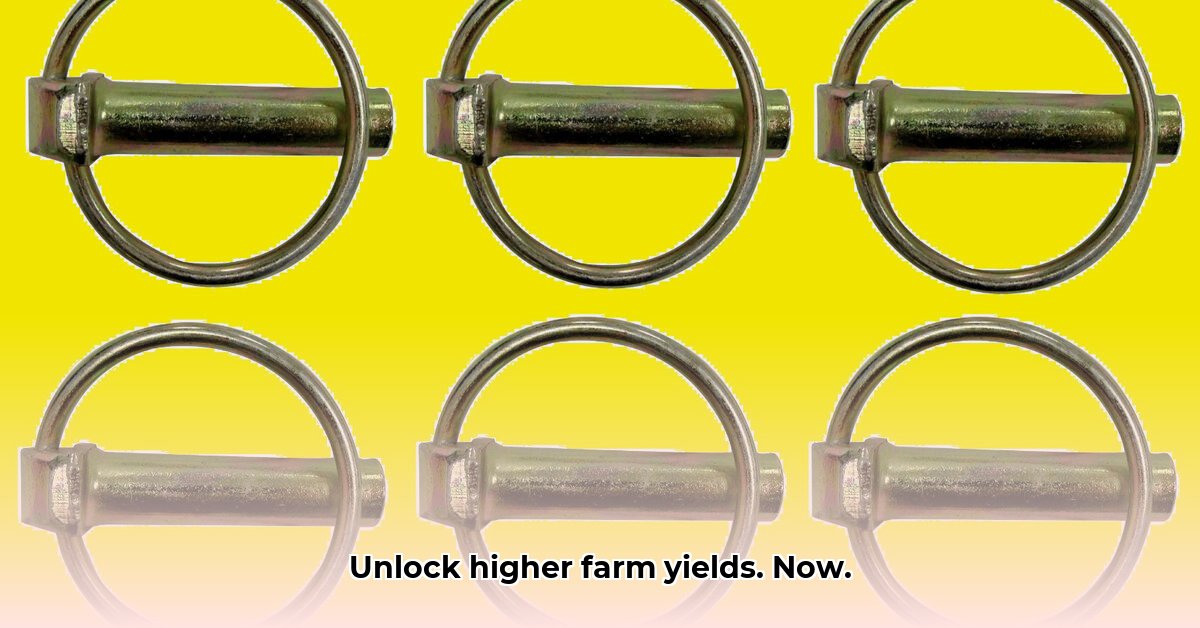
Lynch Pins Tractor Supply: Keeping Your Farm Running Smoothly
Farm life is unpredictable. A single equipment breakdown can halt operations, leading to significant financial losses. This is where seemingly insignificant parts, like lynch pins from Tractor Supply, become crucial. These small components hold larger assemblies together, ensuring smooth equipment function. Investing in their timely replacement prevents costly repairs from larger equipment damage. A small investment in a lynch pin prevents a far greater headache later. For more farm equipment needs, check out Tractor Supply's other offerings.
The Tiny Parts That Make a Big Difference
Tractor Supply lynch pins are unsung heroes of farm equipment. Their small size belies their importance in maintaining overall equipment functionality. Neglecting them can lead to cascading failures, costing far more in the long run. Regularly checking and replacing worn lynch pins is a proactive measure supporting sustainable farming practices and consistent operations. Isn't preventing downtime worth a small investment?
Why Tractor Supply? Convenience and Reliability
Tractor Supply offers a wide selection of parts at competitive prices, but its true value is convenience. Farmers can quickly purchase needed parts, minimizing downtime and maximizing operational time. This on-the-spot accessibility is invaluable during peak seasons, saving time and money, crucial aspects of sustainable farming. "The speed of getting parts is vital," says John Miller, Farm Manager at Green Valley Farms, “and Tractor Supply's local presence is a game-changer.”
Beyond Lynch Pins: Keeping Your Equipment in Top Shape
While lynch pins are essential, they're only one piece of the puzzle. Regular maintenance is crucial for optimal equipment performance and longevity.
Here's a simple maintenance checklist:
- Regular Inspections: Conduct frequent equipment checks for early detection of wear and tear. Catching small issues early minimizes larger, more expensive repairs later.
- Lubrication: Proper lubrication reduces friction, preventing premature wear and tear. Aim for consistent lubrication as per manufacturer's instructions.
- Cleaning: Regular cleaning prevents rust and corrosion, extending equipment lifespan. A clean machine is more efficient.
- Prompt Repairs: Address small problems immediately to prevent them from escalating into larger, costlier issues. This reduces unexpected downtime.
The Money-Saving Magic of Preventative Maintenance
Preventative maintenance isn't merely about avoiding breakdowns; it maximizes financial returns. Smaller, timely repairs are far less expensive than major overhauls. This translates to more time farming and less time in repair, directly impacting profitability and the sustainability of your farm operations. Isn't a proactive approach the most financially sound choice?
Choosing the Right Lynch Pin: Size Matters!
Selecting the correct lynch pin is crucial for safe and efficient operation.
- Size: Accurate measurements are imperative. Using an improperly sized lynch pin compromises equipment integrity and safety.
- Material: Choose materials appropriate for the application's stress and environmental conditions. Some materials are far more durable than others.
- Strength: Ensure sufficient strength to withstand expected stress loads. A stronger pin may prevent catastrophic failures.
If uncertain, consult Tractor Supply staff for expert guidance on selecting the correct lynch pin. Their expertise ensures correct part selection for your specific needs.
The Long View: Sustainable Farming and Smart Practices
Sustainable farming encompasses both environmental stewardship and sound business practices. Efficiency, timely repairs, and minimal downtime are essential for profitability. Investing in quality parts like Tractor Supply's lynch pins is a long-term investment in the farm's future. It’s the smart approach for sustainable farming.
How to Implement Precision Farming Techniques for Sustainable Agriculture
Key Takeaways:
- Precision agriculture significantly enhances efficiency and sustainability.
- Implementation requires strategic planning and investment.
- Data analysis is vital for informed decision-making. Technology adoption varies based on farm size and resources.
- Collaboration and support networks are essential for success.
Understanding Precision Agriculture's Potential
Farming faces challenges: tight margins, precious resources, and unpredictable weather. Precision agriculture offers a solution—using technology to work smarter. Instead of broad applications, resources like fertilizer can be precisely targeted to where they're most needed, increasing efficiency. This approach significantly boosts both yield and profitability.
Essential Steps to Implementation
Implementing precision agriculture is a strategic process.
- Assess Your Farm: Evaluate your land, crops, and current practices. Identify areas for improvement and set realistic goals.
- Choose the Right Technology: Select technologies aligning with your budget and needs, starting small and focusing on key areas.
- Gather and Analyze Data: Data from various sources (soil samples, yield maps, etc.) informs decision-making. A well-structured data management system is essential.
- Implement Variable Rate Technology (VRT): VRT optimizes resource use and minimizes environmental impact by precisely applying inputs.
- Monitor and Adapt: Continuously monitor results and adapt strategies based on real-time data for ongoing optimization.
Financial Considerations: Balancing Investment and Return
Precision agriculture requires upfront investment, but long-term benefits often outweigh the initial costs. Reduced input use, increased yields, and minimized environmental damage contribute to higher profitability. It's an investment in the future of your farm.
| Aspect | Pros | Cons |
|---|---|---|
| Initial Investment | Increased efficiency and yield potential in the long run | High upfront costs for technology and equipment |
| Operational Costs | Reduced input costs (fertilizers, water, pesticides) | Ongoing costs for data management, software, and maintenance |
| Return on Investment (ROI) | Improved yields, reduced waste, higher profit margins | ROI can vary significantly depending on implementation and market conditions |
The Sustainability Factor: Protecting the Environment
Precision agriculture promotes environmental stewardship. Efficient resource use minimizes negative environmental impacts, contributing to a sustainable agricultural future. Reduced waste means a healthier environment—a win-win situation.